%203.avif)


Batteries and accumulators
A battery or accumulator is a source of electrical energy produced by the direct conversion of chemical energy, consisting of one or more primary non-rechargeable cells or one or more secondary rechargeable cells. Batteries and accumulators are classified as follows:


batteries

batteries (SLI)

batteries

batteries
batteries
A producer is any producer, importer, or distributor, or any other natural or legal person who, regardless of the sales technique used, including distance contracts, either:
(a) is established in a Member State and manufactures batteries under its own name or trademark, or has batteries designed or manufactured and supplies them for the first time under its own name or trademark, including batteries incorporated into appliances, light vehicles, or other vehicles, within the territory of that Member State;
(b) established in a Member State and, within the territory of that Member State, resells under its own name or trademark batteries, including batteries incorporated into appliances, light vehicles, or other vehicles, which are manufactured by others and on which the name or trademark of those other manufacturers is not indicated;
c) is established in a Member State and, in that Member State, for the first time in the course of its business, supplies batteries, including batteries incorporated into appliances, light vehicles, or other vehicles, from another Member State or from a third country; or
d) sells batteries, including those incorporated into appliances, light vehicles, or other vehicles, through distance contracts directly to end-users, regardless of whether they are private households, in a Member State, and is established in another Member State or in a third country
%203.avif)
Batteries and accumulators
Act No. 79/2015 Coll. on Waste and on Amendments to Certain Acts, as amended
Decree of the Ministry of the Environment of the Slovak Republic No. 365/2015 Coll., establishing the Waste Catalogue
Decree of the Ministry of the Environment of the Slovak Republic No. 366/2015 Coll. on record-keeping and reporting obligations
Decree of the Ministry of the Environment of the Slovak Republic No. 370/2015 Coll. on rates for calculating contributions to the Recycling Fund, on the list of products, materials, and equipment for which a contribution to the Recycling Fund is payable, and on details regarding the content of applications for funds from the Recycling Fund
Decree of the Ministry of the Environment of the Slovak Republic No. 371/2015 Coll., implementing certain provisions of the Waste Act
Decree of the Ministry of the Environment of the Slovak Republic No. 372/2015 Coll. on the Landfilling of Waste and the Temporary Storage of Metallic Mercury
Decree of the Ministry of the Environment of the Slovak Republic No. 373/2015 Coll. on the Extended Producer Responsibility for Designated Products and on the Management of Designated Waste Streams
Act No. 17/2004 Coll. on Fees for Waste Disposal
Act No. 127/2006 Coll. on Persistent Organic Pollutants
Act No. 582/2004 Coll. on Local Taxes and Local Fees for Municipal Waste and Separately Collected Waste
Regulation of the European Parliament and of the Council (EU) 2023/1542 of July 12, 2023 on batteries and waste batteries, amending Directive 2008/98/EC and Regulation (EU) 2019/1020 and repealing Directive 2006/66/EC
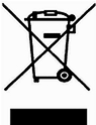
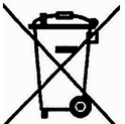
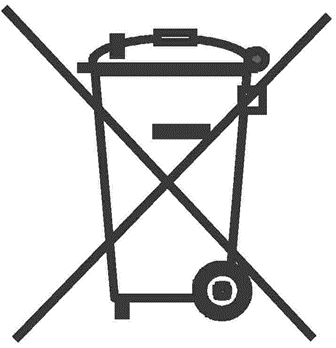
All BaA must be marked with the graphic symbol of a crossed-out waste bin, which indicating separate collection. The symbol must be printed visibly, legibly and indelibly.
%201.avif)
Batteries and accumulators
As part of collective compliance, the producer responsibility organization ASEKOL SK will ensure, pursuant to a contract for the fulfillment of designated obligations on behalf of the represented producer, that the following obligations are met:
The information obligation of battery and accumulator manufacturers [pursuant to Section 27(4)(i) of the Act] is to provide end users of batteries and accumulators with information regarding:
The symbol marking "separate collection" consists of a crossed-out wheeled bin. All batteries, accumulators, and battery packs must be appropriately marked with this symbol.Batteries, accumulators, and button cells with a mercury content higher than 0.0005%, cadmium higher than 0.002%, or lead higher than 0.004% are marked with the chemical symbol of the given metal, i.e., Hg, Cd, or Pb. The symbol indicating the heavy metal content is placed below the crossed-out wheeled bin symbol and is at least one-quarter the size of that symbol.
The crossed-out wheeled bin symbol shall cover at least 3% of the area of the largest side of the battery, accumulator, or battery pack, with a maximum size set at 5 × 5 cm. In the case of cylindrical cells, the symbol covers at least 1.5% of the surface area of the battery or accumulator and has a maximum size of 5 × 5 cm.
If the size of the battery, accumulator, or battery pack is such that the symbol would be smaller than 0.5 × 0.5 cm, the battery, accumulator, or battery pack does not need to be marked. A symbol of at least 1 × 1 cm shall be printed in a visible, legible, and indelible manner on the packaging.
In the event that a manufacturer, within the meaning of §27 par. 7 let. a), places batteries and accumulators on the market for the needs of their own business and these remain in their possession at all times, they also become the waste generator and shall ensure the management of waste from this product; they do not have to fulfill obligations for these batteries and accumulators either collectively or individually. However, the obligation of registration, reporting changes, ensuring material composition, product design and marking, maintaining records and reporting specified data to the Ministry of Environment of the Slovak Republic and the Coordination Center, and ensuring recycling and recovery at least to the level of binding targets and limits remains.
Would you like me to translate any other sections of the waste act or technical requirements for battery labeling?
Extend the life of your batteries
Do not let a battery run completely flat and avoid overheating it. Store it in a cool, dry place. Consider having a worn-outbattery reconditioned - this will help prevent waste.
Separate collection is your responsibility
Never dispose of waste batteries in household waste. Hand them in free of charge at a collection point - at an electronics shop, a recycling centre or another collection point in your local area. You can find a list of locations here.
Safe handling
Do not pierce damaged or swollen batteries, and do not throw them into a fire. Lithium batteries (from mobile phones, laptops, e-bikes) can catch fire if damaged - place them in a non-flammable container and hand them in at a collection point as soon as possible.
Symbols on batteries
A crossed-out wheelie bin means the battery is for separate collection. The symbols Pb, Cd or Hg indicate the presence of lead, cadmium ormercury - substances harmful to the environment and human health.
Why sort waste?
Batteries contain hazardous substances which, if disposed of incorrectly, pollute both soil and water. By handing them in correctly, you are helping to ensure their safe processing and the recovery of valuable raw materials.
Where next?


%201.svg)
%201.svg)